Dr. Elizabeth Dimovski

Dr. Elizabeth Dimovski
Dentists Brampton

Pages

Showing posts with label ORAL HEALTH. Show all posts

Dental Sealants - Kids Dentist Brampton


Dental Sealants, Brampton Family Dentist, Kids Dentist Brampton, Oral Health, Brampton,
Sealants are a tooth coloured coating that is applied to the biting surface of the back teeth. The grooves on the top of the molars are very deep and is a good area for bacteria to live in and multiply. Even with great oral hygiene some of these areas will still get a cavity because the bristles of the tooth brush can not get to these deep areas. Dental sealants act as a barrier against decay-causing bacteria.

When applied it fills in the pit and groves and makes a smooth surface.  Easy for a tooth brush to keep clean. The application of a sealant is quick, easy and painless. No drilling or freezing are required. Sealants also cost less than having a cavity filled.

After having a sealant placed you should continue to brush and floss properly.

Following Canada’s Food Guide, which is low in sugar and high in nutrition, is recommended.

905-458-6620

Proper Care for your Toothbrush - Brampton Dentists

Brampton Dentist, Best Toothbrush, Dentist Near me, Best Dentist in Brampton,


* Do not share your toothbrush or use someone else’s toothbrush

* After brushing, rinse your toothbrush thoroughly with tap water and allow to air-dry
* Store standing upright. If it is near other toothbrushes, do not let the heads touch
* Do not store in closed containers
* Replace your toothbrush every three to four months or when the bristles look worn and bent

Proper Way to FLOSS

Flossing

Flossing removes plaque and bacteria that you cannot reach with your toothbrush. If you don't floss, you are missing more than one-third of your tooth surface. Plaque is the main cause of gum disease. It is an invisible bacterial film that develops on your teeth every day.

Within 24 to 36 hours, plaque hardens into tartar (also called calculus), which can only be removed by professional cleaning. Floss at least once a day, and plaque never gets the chance to harden into tartar. Getting into the habit of daily flossing is easier when you floss while doing something else like watching TV or listening to music, for example.

How to floss your teeth

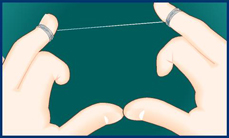
Brampton Family Dentist,Step 1
Take a length of floss equal to the distance from your hand to your shoulder.
Wrap it around your index and middle fingers, leaving about two inches between your hands.
dentists Brampton, Brampton Family Dentist, Dental Info,


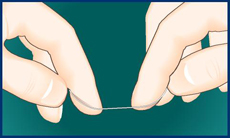
Step 2
Slide the floss between your teeth and wrap it into a "C" shape around the base of the tooth and gently under the gumline. Wipe the tooth from base to tip two or three times.

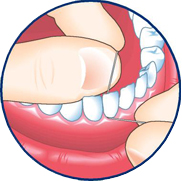
flossing your teeth, brampton Dental Offices, Best Dentist in BramptonStep 3
Be sure to floss both sides of every tooth. Don't forget the backs of your last molars. Go to a new section of the floss as it wears and picks up particles.


Information as per the Canadian Dental Association

Dental Office - Brampton Ontario


YOUR CHILD'S DIET AND THEIR DENTAL HEALTH

Parm SAYS!

Does my child’s diet affect their dental health?

Yes!  It is very important to have a balanced and healthy diet for a child during their developing years, not only for the teeth but as well as for their overall health.  A balanced diet will naturally supply all the nutrients needed to promote healthy gum tissue and teeth and body's development. It is crucial to know that a diet consisting of certain carbohydrates such as sugars and starches may place your child at extra risk for tooth decay. A balanced diet should include food from the four major food groups every day, such as vegetables and fruits, grains, breads and cereals, milk and dairy products, meat, fish, nuts, lentils, and eggs.

An easy way to get all the nutrients that body needs is to consume foods following the Canadian Food Health Guide.  Some foods with starch include pasta, breads, crackers, cookies and such snacks as pretzels and potato chips. There are some natural sugars that can also be found in  Fruits, a few vegetables and most milk products have at least one type of sugar. These natural sugars are a lot better than the refined sugars but in moderation. 


To avoid the promotion of cavities, it is best to have sugar or starchy foods with a meal, and not as a snack.  Sticky foods, such as peanut butter, dried fruit or toffee, are not easily washed away from the teeth by saliva, or fluids. The foods that are not rapidly cleared from the mouth have more potential to cause cavities. It is important to check the frequencies of these sticky/sugar/starchy foods. Too much consumption of these varieties will aid in the progression of cavities. So choose and select wisely when making choices for snacks and meals. It is best to discuss with your Dentist about selecting and serving foods that protect your child's mouth. 


Blog by Parm RDH

HOW ANOREXIA AND BULIMIA AFFECTS YOUR ORAL HEALTH

feet next to a scale

Anorexia and Bulimia

Unfortunately, people who suffer from an eating disorder are likely to develop a dental problem as well.
Bulimia is an eating disorder in which a person vomits frequently after eating, often several times a day, as a way to avoid gaining weight. Frequent vomiting can cause a dental problem because the acid from the stomach can wear away the enamel on the teeth.
In addition, people with anorexia nervosa are at increased risk for dental problems. Anorexia nervosa is an eating disorder in which a person severely limits food intake and loses a drastic amount of weight. Many people with anorexia can become deficient in nutrients that promote oral health, such as calcium, iron, and B vitamins. Insufficient calcium promotes tooth decay and gum disease, and even if you do consume enough calcium, you need enough vitamin D to absorb help the body absorb it. Insufficient iron can foster the development of sores inside the mouth, and insufficient amounts of vitamin B3 (also known as niacin) can contribute to bad breath and the development of canker sores.